How-to
What is an ETF? A Simple Guide for Beginners
What are Exchange-Traded Funds (ETFs), how do they work, what are their benefits and risks, and what role do the new Spot Bitcoin ETFs play in the financial world?
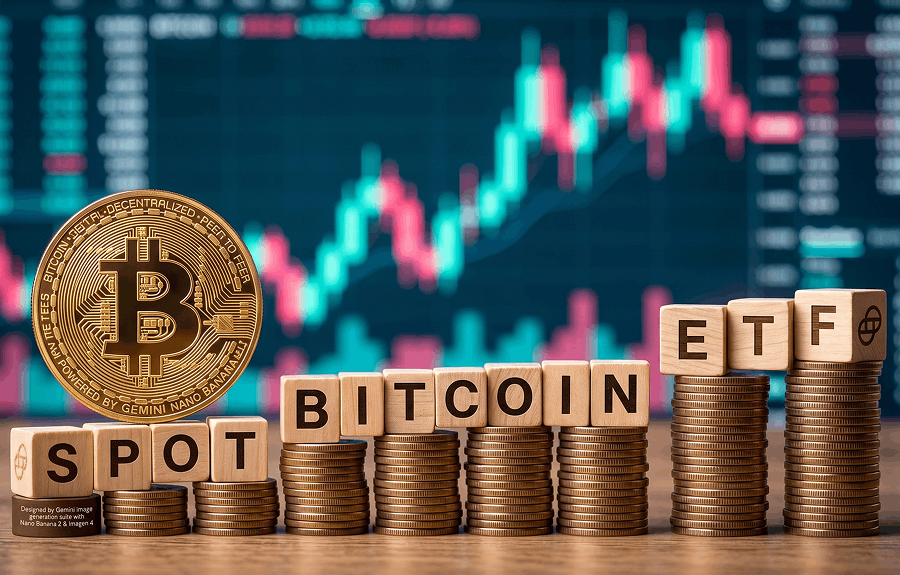
An educational guide on Exchange-Traded Funds (ETFs). Learn how these financial instruments make it easy and cheap to diversify your portfolio, how they differ from mutual funds, and how Spot Bitcoin ETFs are changing the landscape.
Imagine you want to make an exotic fruit salad. You have two choices: go to the supermarket and buy each fruit individually - a mango, a pineapple, a passion fruit, a coconut, and a papaya - which takes a lot of time and gets quite expensive. Or, you can simply buy a ready-made, professionally prepared cup of exotic fruit selection.
In the financial world, ETFs or Exchange-Traded Funds are exactly this ready-made "fruit cup." Instead of researching and buying hundreds of individual stocks or bonds yourself, you can buy a single share of a fund that already contains a diversified selection.
In this beginner-friendly guide, we will explain in simple terms what an ETF is, how it works, why it has become the most popular financial instrument globally, and how the landscape has been transformed by the new cryptocurrency ETFs.
What Does ETF Stand For?
ETF stands for Exchange-Traded Fund.
Let's break this down into three simple components:
- Fund: This means many investors pool their money together to buy a basket of assets (stocks, bonds, gold, or even Bitcoin).
- Traded: Shares of this fund can be freely bought and sold.
- Exchange: The trading happens on a public stock exchange (just like buying shares of Apple or Tesla). You can see the price update by the second and execute a trade anytime the market is open.
How Do ETFs Work in Practice?
Most ETFs track a specific index. An index is like a benchmark list that measures the performance of a particular segment of the market.
The most famous example is the S&P 500 Index, which comprises 500 of the largest and most successful US companies (including Microsoft, Amazon, Nvidia, and Alphabet).
- If you invest in an ETF tracking the S&P 500 index, you automatically become a tiny partial owner of all 500 companies.
- If the US economy and these companies grow, the value of your ETF share increases. If they perform poorly, the value drops.
You don't need to purchase all 500 stocks yourself and pay huge brokerage fees. You simply buy one ETF share, which often costs only a few dozen or hundreds of euros.
Three Major Benefits of ETFs for Beginners
Why do millions of investors worldwide choose ETFs over individual stocks?
1. Instant Diversification (Risk Reduction)
Diversification is the golden rule of investing - often described as "not putting all your eggs in one basket." If you buy shares of a single company and it goes bankrupt, you lose all your money. However, if your ETF basket holds 500 companies, the bankruptcy of a single firm will barely affect the total value of your portfolio.
2. Extremely Low Costs
Traditional actively managed mutual funds employ expensive managers who try to "beat the market" and charge high annual fees (often 1% to 2% of your investment). ETFs are passive financial instruments - a computer program simply duplicates the chosen index. Because of this, the management fees are negligible (often 0.05% to 0.2% per year), allowing you to keep much more of your returns in the long run.
3. Simplicity and Accessibility
You don't need advanced financial knowledge or massive capital to start investing in ETFs. Many modern brokerage platforms, such as the EU-licensed multi-asset app Lightyear, let you buy ETF shares with just a few euros, offering fractional shares (the ability to buy just a tiny piece of an expensive ETF).
Types of ETFs: From Stocks to "Digital Gold"
ETFs aren't just for stocks. They can contain various types of assets:
- Equity ETFs: Track global markets (e.g., the entire world or specific sectors like tech or healthcare).
- Bond ETFs: Hold government or corporate bonds, providing regular interest payments at a lower risk level.
- Commodity ETFs: Let you invest in gold, silver, or oil without physically storing these materials in your house.
- Cryptocurrency ETFs: This is the newest and fastest-growing category.
Spot Bitcoin ETF: What is it?
At the start of 2024, a revolution took place in the financial world - the first Spot Bitcoin ETFs were approved in the United States.
Simply put, a spot Bitcoin ETF is a regulated financial instrument created by Wall Street giants like BlackRock and Fidelity. They buy and securely store real Bitcoins themselves, and then launch shares of this fund on the stock exchange.
If you buy a share of such an ETF:
- You benefit from Bitcoin's price appreciation without having to buy the actual cryptocurrency yourself.
- You don't have to worry about crypto exchange hacks, private keys, or wallet setups.
- It is a fully regulated and secure way for traditional investors to include this new asset class in their portfolio.
To learn how this affects the global financial system and why major pension funds are now investing heavily in crypto, read our deep-dive analysis: Bitcoin ETF and Institutional Investors: The New Standard for Portfolio Diversification.
How Do ETFs Differ from Traditional Mutual Funds?
Many beginners confuse ETFs with traditional mutual funds, which are typically offered by commercial banks. Here are the main differences:
| Feature | ETF (Exchange-Traded Fund) | Traditional Mutual Fund |
|---|---|---|
| Where to buy? | Freely on the stock exchange anytime through a broker | Only through the bank, transaction processed once a day |
| Annual Fees | Very low (typically 0.05% – 0.3%) | High (typically 1.0% – 2.5%) |
| Management Style | Passive (tracks an index) | Active (manager tries to select the best performing stocks) |
| Minimum Investment | Often from €1 (with fractional shares) | Banks often require a set minimum starting sum |
Historical data shows that over the long term (a 10-15 year period), more than 85% of actively managed bank funds underperform simple and cheap passive ETFs, largely due to high management fees.
Risks to Keep in Mind
While ETFs are an excellent and safe way to start investing, they are not completely risk-free:
- Market Risk: An ETF is only a mirror of the asset it tracks. If the S&P 500 index drops by 20%, your S&P 500 ETF will also lose 20% of its value.
- Sector Concentration Risk: If you choose a highly specific ETF (such as only green energy or only artificial intelligence), you lose some diversification benefits. If that specific sector experiences a crisis, your fund will suffer heavy losses.
- Currency Risk: If you buy an ETF denominated in US dollars (USD) but your base currency is euros (EUR), your investment's value will be affected by fluctuations in exchange rates.
How to Start Investing in ETFs
Starting your ETF investment journey is easier than you think. You only need to follow a few practical steps:
- Choose a Regulated Broker: Look for platforms licensed to operate in the European Union. Excellent options include Lightyear (great for beginners with zero-commission ETF trading and interest on uninvested cash) or the well-known eToro.
- Register and Verify Your Account: EU regulation requires identity verification (KYC). This only takes a few minutes but guarantees the safety of your funds.
- Deposit Funds: Make your first euro deposit via bank transfer (usually free) or credit card.
- Select Your First ETF: For beginners, the safest choices are global stock index funds, such as MSCI World or S&P 500 ETFs.
- Set Up a Recurring Payment: Utilize the DCA (Dollar-Cost Averaging) strategy. Instead of trying to time the market, invest a small, fixed amount every month. Read more on how to build this long-term savings discipline in our guide: How to Start Investing Safely in the Baltics and Nordics.
Conclusion
ETFs have fundamentally changed how ordinary people access financial markets. They have made investing cheap, secure, diversified, and accessible to everyone, regardless of their budget. The new cryptocurrency ETFs represent another step forward, merging the security of traditional Wall Street with innovative technology.
Before you begin, always choose brokers licensed in the European Union and local jurisdictions - this protects your capital and provides legal security. For more details on the new EU regulations governing digital assets, read our Explanation of the European MiCA Regulation.
Disclaimer: This article is for educational purposes only and should not be considered personal financial advice. Investing on the stock market carries the risk of losing part or all of your invested capital. Conduct thorough research before making any financial decision.