How-to
Stablecoin Guide 2026: Pros, Cons & Best Choices
How stablecoins differ from Bitcoin and Ethereum, why USDT is no longer on EU exchanges, why USDC and EURC are the best choices under MiCA, and what went wrong with Terra 2022 and USDC 2023
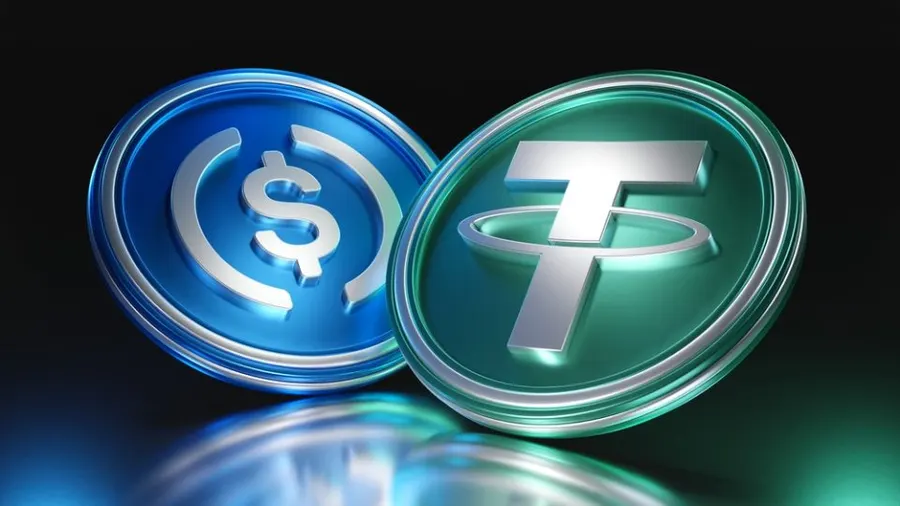
Stablecoins combine blockchain speed with currency stability. This guide explains the three main types (fiat-, crypto-, algorithmic), the May 2026 market (USD 322 billion total, USDT 58%), real-world risks (Terra collapse 2022, USDC depeg 2023) and why USDC and EURC are the best choices in the regulated EU market.
So what actually is a stablecoin?
Imagine that cryptocurrency — Bitcoin, Ethereum and the rest — is like a ship out at sea. Day after day, the wind and waves rock it hard: today Bitcoin is at USD 80,000, tomorrow USD 75,000, the day after USD 84,000. Great if you want to profit from price swings, but terrible if you simply want to send money to a friend in Spain and have no idea whether two hours later they'll still receive EUR 200 or only EUR 180.
A stablecoin is cryptocurrency's attempt to solve that problem. It is a digital asset on a blockchain (usually Ethereum, Solana or Tron) whose price is pegged to a stable asset — most often the dollar or the euro. One stablecoin "token" = 1 USD or 1 EUR. The basic idea is simple: take the speed and global reach of a blockchain, but strip out the scary price swings. To the user it looks almost like money in a PayPal account — except this "money" moves around the world 24/7, in minutes, without a bank.
That all sounds too simple to be true. And so — depending on how a stablecoin "is held at 1 USD" — there are large and important differences in risk and safety. We'll get to that below.
How does a stablecoin differ from Bitcoin and Ethereum?
The main difference is purpose and price behaviour.
Bitcoin and Ethereum are independent assets in their own right. They can be compared to gold or shares — their value is determined by market supply and demand. Some days Bitcoin "jumps" 5% higher, others it drops 10%. Over the past 5 years its price has been below USD 20,000 and above USD 100,000. That makes it interesting as a long-term investment or speculative instrument, but bad as everyday money.
Stablecoins are built the exact opposite way. By design their value is tied to a fiat currency, and the issuer (Circle for USDC, Tether for USDT) holds real reserves — typically US Treasuries and bank deposits matching the supply of stablecoin in circulation. If you hold 1,000 USDC, somewhere (in the BlackRock-managed Circle Reserve Fund) there is USD 1,000 of liquidity.
So stablecoins aren't a speculation instrument — they are a utility tool that lets you use crypto's infrastructure (speed, global reach, programmability) with currency stability.
The three main types of stablecoin — and why this matters
A stablecoin can be "anchored" to the dollar in three quite different ways. This is the part where you need to pay attention:
1. Fiat-backed stablecoins (the safest)
How they work: For every coin issued, the issuer holds 1 USD (or EUR) in real assets — mostly US Treasuries and bank deposits. Third-party auditors (Deloitte in USDC's case) regularly check the reserves.
Examples: USDT (Tether), USDC (Circle), EURC (Circle's euro version), EURI (Member Finance), EURE (Monerium).
Pros: The most stable, regulated, transparent.
Cons: Dependent on the issuer's honesty, the banking system (see the USDC story below) and the regulator.
2. Crypto-backed stablecoins
How they work: A user deposits more Ethereum than the stablecoin's value (e.g. USD 150 in ETH for USD 100 of stablecoin). The excess "buffer zone" protects against ETH price drops.
Examples: DAI (MakerDAO).
Pros: Decentralised; not dependent on a bank or a specific company.
Cons: More complex; if ETH prices drop too quickly, users' collateral can be liquidated automatically.
3. Algorithmic stablecoins (SOME HAVE EXPLODED)
How they work: No real reserves — stability is maintained only by an algorithm and another cryptocurrency, managed by a smart contract.
Example: TerraUSD (UST) — in May 2022 it exploded, wiping out ~USD 50 billion of investor capital within a few days. It was the 3rd largest stablecoin at year-end before the collapse; now it no longer exists.
MiCA effectively bans this type in the European market. If someone offers you a "stablecoin" that doesn't disclose its reserves — stay well away.
Where things stand — the real size of the market in 2026
To understand how significant stablecoins have become, a few numbers from May 2026:
- Total stablecoin market: roughly USD 322 billion.
- USDT (Tether): USD 189.6 billion in circulation (58% market share). Daily trading volume — USD 75 billion+.
- USDC (Circle): USD 77.6 billion in circulation. The only one of the top 10 that is MiCA-compliant.
- EURC (Circle's euro stablecoin): dominates the European market with 50%+ of the euro stablecoin share.
- 2025 stablecoin transaction volume: roughly USD 46 trillion — more than 20× PayPal's volume, almost 3× Visa's volume.
This is no longer a niche instrument. It is a real piece of global financial infrastructure.
What stablecoins unlock — practical use cases
International money transfers
The classic example. Toms in Riga wants to send EUR 500 to his cousin in Argentina. Via the bank — 3–5 days, EUR 25 in fees, bad exchange rates. Via USDC: a few minutes, a smaller fee (typically under EUR 5), and the recipient can immediately convert to the local currency or hold the USDC as a buffer against peso inflation.
Hedging against crypto volatility
A trader on a crypto exchange buys Bitcoin at USD 80,000, it rises to USD 85,000, and they want to "lock in the profit" without yet withdrawing to a bank account (so they can quickly get back into the market later). They sell BTC for USDC. The money stays on the exchange but no longer fluctuates with Bitcoin's price.
DeFi (decentralised finance)
Stablecoins are the "bloodstream" of DeFi protocols (Aave, Compound, Curve). A user can lend out their USDC and earn interest (typically 4–7% a year) or borrow against their Bitcoin (without selling it). These yields are well above Eurozone bank deposit rates — but with a different risk profile.
Salaries and B2B payments
More and more remote workers outside the EU receive their salary in USDC — particularly in international crypto, IT, content and freelance projects. For a company it avoids cross-border bank transfer fees and lets them pay global recipients quickly.
A "digital checking account" in countries with unstable currencies
Argentina, Türkiye, Nigeria — local currencies lose 20–80% a year against USD. Stablecoins become a technological alternative — much simpler than getting a US bank account or buying dollars at local exchange points.
Risks you need to know before using them
Although stablecoins are positioned as "stable", the risks are real. Historical examples:
USDC depeg, March 2023 (8% drop)
On 9 March 2023, Circle (USDC's issuer) disclosed that USD 3.3 billion of its roughly USD 40 billion of reserves was held at Silicon Valley Bank, which within hours became the largest US bank collapse since Washington Mutual in 2008. USDC's price fell to USD 0.87 — 13% below its USD 1 peg. Recovery came only after the US FDIC guaranteed SVB deposits. This is a real lesson that even "stable" tokens are not immune to problems in the traditional banking system.
TerraUSD/UST crash, May 2022 (effectively wiped out)
The third largest stablecoin at the time, with USD 18 billion in market cap. But it was backed only by an algorithm and the cryptocurrency LUNA. As demand began to fall, a "death spiral" started — UST redemptions minted more LUNA, whose price dropped, further undermining UST's backing. Within a few days roughly USD 50 billion of investor capital turned to ashes. It is the strongest reminder that algorithmic stablecoins without real collateral can collapse.
The main risk categories
Issuer risk — does Circle or Tether actually hold the real reserves and manage them honestly? USDC has a Deloitte audit; Tether has historically been criticised for a lack of transparency.
Bank risk — even if reserves exist, the bank holding them can fail (the USDC/SVB story).
Regulatory risk — countries can ban or restrict stablecoins. USDT has already been delisted from MiCA-licensed EU exchanges because it is not compliant.
Smart contract risk — DAI and other DeFi-based stablecoins can be hit by smart contract bugs. In 2023 the Curve protocol had an exploit that affected several tokens.
De-pegging risk — even if everything is fine "on paper", market panic can temporarily knock the price off (USDC 2023, USDT historically).
MiCA, and why Europe is now different
In December 2024 the European Union's Markets in Crypto-Assets (MiCA) regulation came fully into force. For stablecoins it introduces strict requirements:
- An issuer licence (Electronic Money Institution or similar)
- 100% reserves in liquid assets
- Transparent, audited books
- Concentration limits on any single bank
- A ban on unbacked algorithmic stablecoins
Practical implications for users in Latvia, Estonia, Lithuania, Finland, Sweden and Norway:
USDT (Tether) has been removed from MiCA-licensed EU exchanges. Coinbase, Kraken, Bitstamp and others do not support USDT for European customers. You can still hold USDT in a self-custody wallet, but it is harder to buy/sell through regulated channels.
USDC is MiCA-compliant via Circle Mint Europe SAS in France (EMI licence). It is the only one of the top 10 stablecoins that is fully compliant. Available on every major EU exchange.
EUR-denominated stablecoins have grown +1,200% since MiCA came into force — mainly EURC (Circle, ~50%+ market share), EURI (Member Finance), EURE (Monerium), EURQ (Quantoz).
Unbacked algorithmic stablecoins are effectively banned. TerraUSD-style projects cannot be legally offered in the EU.
Which one to choose? Practical recommendations for Baltic and Nordic users
If you are an EU customer and use MiCA-licensed exchanges (Coinmotion, Northcrypto, Bitstamp, Bitvavo, Coinbase, etc.):
Choice #1: USDC — if you want a USD-denominated stablecoin. MiCA-compliant, Deloitte-audited; Circle is a public company on NYSE (since June 2025) and is active on every major exchange. USDC survived the 2023 crisis and has since strengthened its position.
Choice #2: EURC — if you want a euro stablecoin and don't want EUR/USD currency-risk exposure. It is MiCA-compliant and dominates the European market. Plus — for an EUR-denominated EU resident (earning EUR and spending EUR), USDC still carries EUR/USD risk; EURC removes that.
Choice #3 (for more advanced users): EURI or EURE — smaller players, but 100% MiCA-compliant and specifically aimed at the European market. May be harder to access on retail exchanges.
What to avoid:
- USDT outside self-custody wallets (Ledger, Trezor). It is still the largest stablecoin by market cap, but in the regulated EU channel it is restricted.
- DAI as your main holding instrument — DAI is crypto-backed and partly USDC-backed, which means a double layer of risk exposure.
- Any smaller or unknown stablecoin with a high APY in DeFi protocols — most likely an elevated risk. The 19.5% APY on UST was the biggest warning sign before the Terra crisis.
How to get started — practical steps
-
Pick a MiCA-licensed exchange. Popular ones in Latvia and the Baltics: Coinmotion (Finland), Northcrypto (Finland), Bitstamp (Luxembourg), Coinbase (Luxembourg), Bitvavo (Netherlands). Full list in our CASP registry.
-
Complete KYC — an ID document + selfie. On EU regulated exchanges this is mandatory.
-
Deposit EUR via SEPA Instant. Most exchanges accept free SEPA transfers; the money usually arrives within 10 seconds.
-
Buy USDC or EURC. Trading fee is typically 0.1–0.5%. Try to avoid "instant buy" buttons — they often add a hidden 3–5% markup.
-
Consider a hardware wallet for larger amounts. If you hold more than USD 1,000 of stablecoins long-term, a Ledger or Trezor wallet protects you from exchange risk (exchange hacks, regulatory action, exchange bankruptcy).
-
Make sure you understand exactly where the money is. On an exchange = in the exchange's account (counterparty risk); in a wallet = on-chain (smart contract risk, but no exchange risk).
Summary
Stablecoins are the most beginner-friendly entry point into the crypto world — they provide speed and global reach without Bitcoin's intimidating volatility. USDC and EURC are the best choices in the regulated EU market in 2026 — both MiCA-compliant, both audited, both available on every major exchange.
Even so, neither USDC nor EURC is 100% risk-free — the USDC SVB episode in 2023 is a real reminder that stability rests on the issuer's honesty and the banking system's functioning. Algorithmic stablecoins without real backing (TerraUSD being the example) have shown that they can wipe out USD 50 billion in days.
The right approach: start small, use a regulated exchange, choose simple, large and transparent stablecoins (USDC or EURC), and don't accept a high DeFi APY without understanding where the yield comes from. In this field, just as in traditional finance, "too good to be true" usually also isn't true.
Related
- Buying your first Bitcoin in Latvia in 2026
- List of MiCA-licensed exchanges in the Baltics and Nordics
- CASP registry across all 7 countries
- Regulation in Latvia
Sources
- DefiLlama — Stablecoin Market Cap Chart
- CoinGecko — Top Stablecoins by Market Cap
- Cryptopolitan — Euro Stablecoins Explode 1200% Under MiCA
- Circle — MiCA Compliant Stablecoins
- KYC Chain — Stablecoin Regulations 2026: USDT vs USDC
- CNBC — USDC breaks dollar peg after SVB exposure (March 2023)
- Chainalysis — How TerraUSD Collapsed