News
Qivalis - 37 European banks euro stablecoin 2026
Amsterdam-based Qivalis is a consortium of 37 European banks from 15 countries planning to launch a MiCA-compliant euro stablecoin in H2 2026. The largest coordinated on-chain finance initiative by European banks, challenging US dollar dominance in stablecoins
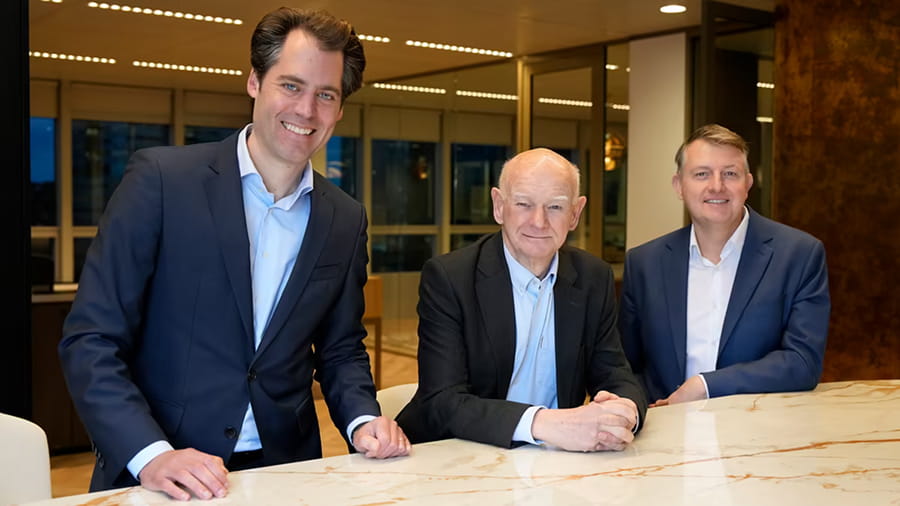
37 European banks from 15 countries have formed the Qivalis consortium to launch a regulated euro stablecoin in the second half of 2026. The founders - BNP Paribas, ING, UniCredit, CaixaBank, Danske Bank, SEB and others - started with 12 banks in December 2025, but the consortium tripled to 37 members on 20 May 2026. An EMI licence application has been filed with the Dutch central bank. Fireblocks supplies the technology infrastructure. This is a direct response to US dollar stablecoin dominance ($320B market, 95% dollar) where euro stablecoins still account for under 1%. In this detailed review we analyse the Qivalis structure, strategic significance and why it matters to Baltic and Nordic users.
What is Qivalis and why does it matter?
Qivalis is an Amsterdam-based company - a joint venture set up by 37 large European banks from 15 countries to issue a fully regulated euro-pegged stablecoin with a 1:1 backing. The consortium is heading to market in the second half of 2026, and the scale of the project already makes it the largest coordinated on-chain finance initiative by European banks in history.
In the Norriwire context, this project matters on three counts: it is the euro's response to US dollar stablecoin dominance (95-98% of the $320 billion market); it is the traditional banking system stepping into the blockchain space with real MiCA compliance; and it is a historic moment for Baltic and Nordic bank involvement - Danske Bank, SEB and Nordea are all consortium members.
Quick facts
| Item | Status |
|---|---|
| Legal name | Qivalis (Amsterdam, Netherlands) |
| Type | Banking consortium joint venture |
| Founded | December 2025 |
| Founders | 12 banks (BNP Paribas, ING, UniCredit, CaixaBank, BBVA, Danske Bank, DekaBank, DZ BANK, KBC, Raiffeisen Bank International, SEB, Banca Sella) |
| Current members | 37 banks from 15 countries (as of 2026-05-20) |
| CEO | Jan-Oliver Sell |
| Board chair | Howard Davies (former FSA chief) |
| Tech partner | Fireblocks |
| Regulator | De Nederlandsche Bank (DNB) - EMI licence application filed |
| Planned launch | Second half of 2026 |
| Compliance | MiCA / MiCAR |
The 12 founders and 25 newcomers
Original 12 founders (December 2025):
BNP Paribas (FR), ING (NL), UniCredit (IT), CaixaBank (ES), BBVA (ES), Danske Bank (DK), DekaBank (DE), DZ BANK (DE), KBC Bank (BE), Raiffeisen Bank International (AT), SEB (SE), Banca Sella (IT).
The 20 May 2026 expansion - 25 new members:
Joiners include big names like ABN AMRO (NL), Rabobank (NL), Nordea (FI), Intesa Sanpaolo (IT), Erste Group (AT), Piraeus Bank (GR), Banco Sabadell (ES), Bankinter (ES) and Kutxabank (ES).
Spain led the latest wave - five banks bringing strong euro stablecoin backing to Southern Europe. New members also came from France, Sweden, Greece, the Netherlands, Finland, Ireland and Italy.
Baltic/Nordic bank involvement is significant:
- Danske Bank (DK) - one of the 12 founders
- SEB (SE) - one of the 12 founders
- Nordea (FI) - joined on 2026-05-20
That means three large Nordic-region banks are already involved in the project, with potential reach into Latvia, Lithuania and Estonia through their local subsidiaries.
How will the stablecoin be structured?
The Qivalis euro stablecoin will be built to MiCA's strictest requirements and will be one of the first major MiCA-compliant euro stablecoins on the market.
Reserve structure:
- 1:1 euro backing - each token backed by actual euros and high-quality liquid assets
- At least 40% of reserves held in bank deposits
- The remaining 60% invested in high-quality short-term euro-area sovereign bonds, diversified across EU member states
- Regulated custodians - reserves held with licensed custody providers
- Redemption rights - holders entitled to redeem tokens against euros at par at any time
Functionality:
- 24/7 operation via blockchain - in contrast to traditional SEPA transfers that only run on business days
- Programmable payments - automated cash flows driven by code
- Cross-border payments at low cost - no need for SWIFT correspondent banking chains
- Tokenised asset settlement - foundation for tokenising bonds, equities and real estate
- Corporate treasury operations - on-chain corporate capital management
Technology: The technical infrastructure - tokenisation, custody and wallet solutions - is supplied by Fireblocks, the world's leading institutional digital-asset tech provider.
Why does Europe need its own stablecoin?
Today the stablecoin market is almost entirely the dollar's. The numbers are stark:
| Stablecoin | Market cap |
|---|---|
| USDT (Tether) | ~$190B |
| USDC (Circle) | ~$77B |
| All dollar stablecoins | ~95-98% of the $320B market |
| All euro stablecoins combined | ~$910M (< 1%) |
| EURC (Circle) | $443M (41% of EUR market) |
| EURCV (SG-FORGE) | $93M |
"Digital dollarisation" is the situation where European on-chain transactions are settled in US instruments, not in euros. In the words of Qivalis's leadership, that is a direct threat to Europe's economic and digital sovereignty.
Qivalis CEO Jan-Oliver Sell stated: "The euro is the currency of Europe, and on-chain financial infrastructure must run on it. Built by European institutions under European rules."
Chair Howard Davies (former UK FSA chief and Bank of England deputy governor) added: "This infrastructure is critical if Europe is to compete in the global digital economy while retaining strategic autonomy."
How is Qivalis different from the ECB's digital euro?
The ECB's digital euro (CBDC) and the Qivalis stablecoin are two very different things:
| Factor | ECB Digital Euro (CBDC) | Qivalis stablecoin |
|---|---|---|
| Issuer | European Central Bank | Private banking consortium |
| Liability | Direct central-bank liability | Private issuer liability |
| Risk | Risk-free by definition | Bank operational risk (mitigated by reserves) |
| Planned launch | No earlier than 2029 | Second half of 2026 |
| Technology | Still undecided | Blockchain (Fireblocks) |
| Availability | Still to be passed by European Parliament | Commercial product after EMI licence |
ECB President Christine Lagarde was sceptical of private euro stablecoins in early May 2026, saying they are "not the best way to strengthen the euro's international role" and warning of financial-stability risks under market stress.
But the Qivalis banks disagree. Their logic: waiting for a CBDC is too long (2029 is too far off), and the on-chain settlement market is forming right now. If Europe doesn't offer a euro alternative, dollar tokens will capture that ground.
MiCA and the future of MiCA 2
Qivalis is being built within the MiCA (Markets in Crypto-Assets) framework - the world's first unified crypto regulatory regime covering the entire EU.
MiCA's stablecoin requirements:
- Issuers must be licensed credit institutions or electronic money institutions (EMIs)
- Full 1:1 reserves in high-quality liquid assets
- Holder right to redeem tokens at par at any time
- Regular audits and public reserve reporting
The MiCA transition period ends on 1 July 2026. After that date, any crypto service in the EU without a MiCA licence must cease operating.
Notably, on 20 May 2026 (the same day Qivalis announced its 25 new members) the European Commission launched a public consultation on a MiCA review - effectively the first work on what is already being called MiCA 2. A key question: is MiCA making euro stablecoins too safe but uncompetitive compared with their dollar counterparts?
As industry association Blockchain for Europe notes, MiCA has made euro stablecoins more reliable but also less competitive.
Impact on Baltic and Nordic users
Qivalis ties directly into the Baltic and Nordic region in several ways:
1. Three regional heavyweights are involved. Danske Bank (DK), SEB (SE) and Nordea (FI) are all consortium members. When the Qivalis token ships, it will potentially be available through these banks' Baltic subsidiaries.
2. Cross-border payments get cheaper. Today, cross-border SEPA transfers between EU countries can take 1-3 business days. The Qivalis token operates 24/7 and settles in seconds - a meaningful improvement for e-commerce, corporate transactions and freelance payments.
3. A euro stablecoin alternative to USDC and USDT. Today a Baltic or Nordic user wanting to hold a stablecoin is essentially forced into a dollar-based product (USDC, USDT). After the Qivalis launch there will be a real euro alternative without the FX risk.
4. A foundation for tokenised assets. Qivalis is designed as a base layer for tokenised assets - bonds, real estate, even bank deposits. That opens the door to new investment opportunities in the Baltic region.
5. ECB scepticism may shape the project. Christine Lagarde's stance can influence the regulatory process. Watch the European Commission's MiCA 2 consultation - the second half of this year will be decisive.
Compared with the current euro stablecoin set
| Stablecoin | Issuer | Cap | Status |
|---|---|---|---|
| EURC | Circle | $443M | Largest EUR stablecoin, 41% share |
| EURCV | SG-FORGE (Société Générale) | $93M | Second largest, +200% in a year |
| Qivalis | 37-bank consortium | $0 (not yet launched) | H2 2026 launch planned |
| Other smaller | Various issuers | ~$374M | Fragmented |
According to S&P Global Ratings, the euro stablecoin market could grow from €770 million today to €1.1 trillion by 2030 - a 1,400x upside. Qivalis is positioning itself as the base infrastructure for that segment.
Main risks and challenges
1. ECB pushback. Lagarde and the ECB generally are sceptical of private euro stablecoins - which can affect the regulatory process and infrastructure integration.
2. Waiting on the DNB licence. The EMI licence has not yet been granted. If DNB asks for additional commitments or delays, launch could slip to 2027.
3. Low current EUR stablecoin demand. Even if Qivalis succeeds technically, expecting rapid market growth is unrealistic - dollar dominance is strong.
4. MiCA 2 uncertainty. The ongoing review of MiCA could change the rules before Qivalis is even live.
5. Technical execution. Coordinating 37 banks is hard. If any of the major banks balks or delays integration, that can drag the whole project.
Our verdict
Qivalis is a historic moment for the European financial system - the first big coordinated European banking response to dollar stablecoin dominance. The scale and quality of the 37-bank consortium (the largest banks in Germany, France, Italy, Spain and Scandinavia) make this the most serious euro stablecoin initiative to date.
But success is not guaranteed. ECB scepticism, low current EUR stablecoin demand and MiCA 2 uncertainty are real risks. And Qivalis will compete with two already-working products (EURC and EURCV) that have first-mover advantage.
For Baltic and Nordic users, the project is a potentially big step forward - especially if it gets integrated into the everyday services of Danske Bank, SEB and Nordea. Watch the second half of 2026 - that will be the decisive moment.
For broader context on the dollar/euro stablecoin market dynamics, see our piece on the GENIUS Act - first US stablecoin law, which happened in a similar regulatory window to the Qivalis build-out.
Related
- GENIUS Act - first US stablecoin law
- MiCA explainer for the Baltics
- Penning acquires Veli - first MiCA-era consolidation
- LHV Pank - MiCA crypto in an Estonian bank
- Safello - first Swedish MiCA crypto exchange
Sources
- Qivalis, joint venture of European banking consortium, to launch euro stablecoin in H2 2026 - CaixaBank
- Qivalis official website
- Major European Bank Consortium Qivalis - PR Newswire (Fireblocks)
- Pan-European stablecoin effort expands to 37 lenders - CoinDesk
- European Banks' Qivalis Targets H2 2026 Launch - Yahoo Finance
- BBVA Joins Banking Consortium to Issue European Stablecoin
This is not financial advice. Stablecoin products carry risks, including issuer risk and regulatory change. Qivalis has not yet launched and the project can be delayed or restructured before the final product reaches the market. Article prepared on 9 June 2026 based on publicly available information.