How-to
Meme coins guide 2026 — what they are and is it worth it
How meme coins work, the most popular in May 2026 (DOGE, SHIB, PEPE, BONK, TRUMP), comparison with stablecoins and altcoins, MiCA/CASP regulation, risks and tips for Baltic and Nordic readers.
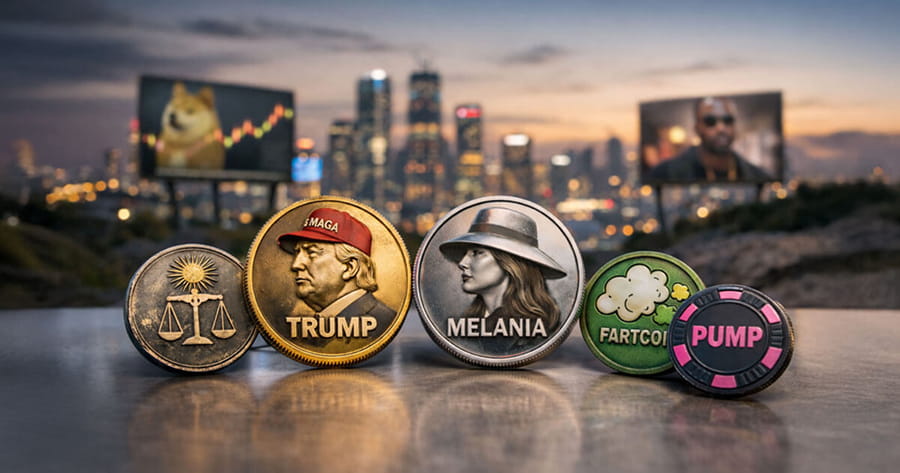
Meme coins are internet-joke cryptocurrencies with a combined market cap of about $34.7 billion in May 2026. This 1000-word guide explains how meme coins technically work (ERC-20, Solana SPL, AMM liquidity pools), covers the top 10 in May 2026 (DOGE, SHIB, MemeCore, PEPE, Official Trump, BONK, Pudgy Penguins, SPX6900, FLOKI, WIF), compares them with stablecoins and altcoins, answers whether MiCA and licensed CASPs apply (yes — whitepaper, marketing rules, due diligence), describes trends (political tokens, AI memes, Solana dominance, pump.fun launchpads) and explains whether it is worth creating your own meme coin. Risks and tips for Baltic and Nordic readers.
Meme coins are cryptocurrencies born from internet jokes, memes or social trends. They don't serve a serious technological function — they're community entertainment and speculation instruments. As of May 2026 the meme coin market cap stands at roughly $34.7 billion, a small slice of the global crypto market but with extraordinary volatility. This guide explains how they work, the most popular ones, compares them with stablecoins and altcoins, covers MiCA regulation and answers the main question — is it worth it.
How meme coins work
Technically meme coins are normal cryptocurrencies built on existing blockchains — usually Ethereum (ERC-20), Solana (SPL) or BNB Chain. Value comes from the community, not the code. Three core principles:
- Viral momentum — price moves when social media (X, Reddit, TikTok) starts talking about the coin
- Liquidity pools — buying and selling happens on decentralised exchanges (Uniswap, Raydium) via AMM pools
- Tokenomics — often huge total supply (trillions of units), low per-unit price, sometimes a "burn" mechanism that destroys part of circulation
Unlike altcoins such as Ethereum or Solana, which have technological utility (smart contracts, DeFi, NFTs), meme coins are mostly a speculation instrument — value depends on narrative, not product.
Most popular meme coins in May 2026
| Rank | Coin | Blockchain | Note |
|---|---|---|---|
| 1 | Dogecoin (DOGE) | Doge (own chain) | The original 2013 meme, Elon-endorsed |
| 2 | Shiba Inu (SHIB) | Ethereum | DOGE rival with its own Shibarium L2 |
| 3 | MemeCore (M) | MemeCore | 2025 newcomer, "meme-as-a-service" |
| 4 | Pepe (PEPE) | Ethereum | Meme character, no utility, massive supply |
| 5 | Official Trump (TRUMP) | Solana | Political figure tokenised |
| 6 | Bonk (BONK) | Solana | First major Solana meme coin |
| 7 | Pudgy Penguins (PENGU) | Solana | NFT project tokenisation |
| 8 | SPX6900 (SPX) | Ethereum | Anti-S&P 500 satirical token |
| 9 | Floki (FLOKI) | Multi-chain | Elon's dog's name, ecosystem play |
| 10 | dogwifhat (WIF) | Solana | Dog with hat, Solana viral hit |
The list shifts week to week — meme markets are extremely volatile.
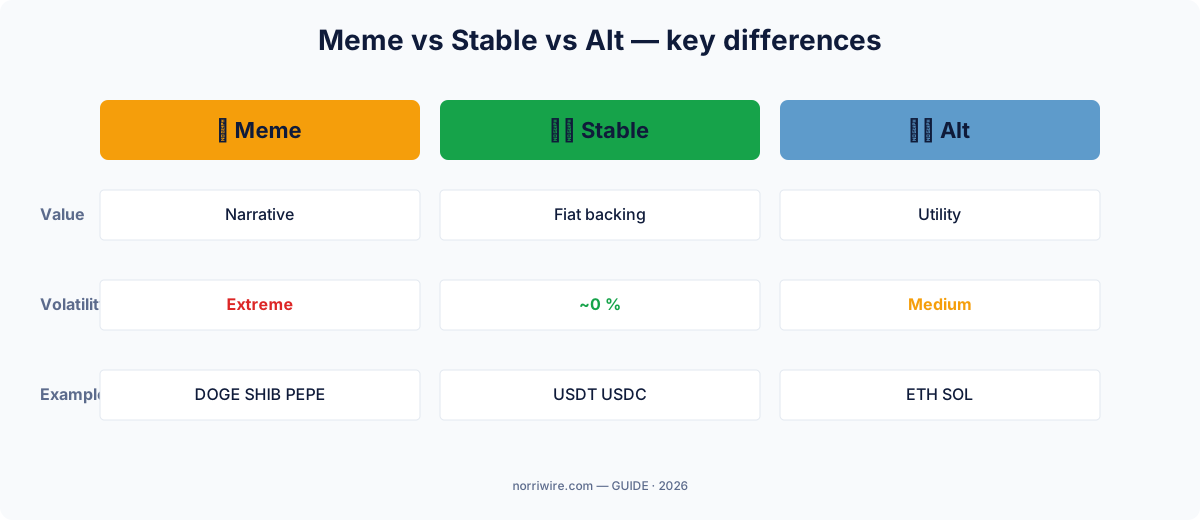
Meme vs stable vs alt coins
| Criterion | Meme coins | Stablecoins | Altcoins |
|---|---|---|---|
| Purpose | Entertainment, speculation | Price stability (≈$1) | Technology, utility |
| Source of value | Community narrative | Fiat or asset backing | Utility, network effects |
| Volatility | Extremely high | Practically 0% | High, but below meme |
| Examples | DOGE, SHIB, PEPE | USDT, USDC, EURC | ETH, SOL, ADA, AVAX |
| Typical holding | Days to weeks | Settlement, safe storage | Months to years |
| MiCA classification | "Other crypto-asset" | EMT/ART (stricter regime) | "Other crypto-asset" |
| Risk of total loss | Very high (~80% per year) | Low (depeg risk) | Medium |
Simplified: stablecoins are "electronic money", altcoins are "tech stocks", meme coins are "lottery tickets with community sparkle".
Are meme coins controlled by MiCA and CASPs?
Yes — since December 2024 MiCA has been in full force and applies to every crypto-asset offered in the EU, including meme coins. Key rules:
- Whitepaper requirement — if a meme coin is publicly offered or admitted to a CASP exchange, the issuer must publish an MiCA Article 6-compliant whitepaper with fair, clear and non-misleading information
- Marketing rules — all promo material must be consistent with the whitepaper (no promises of returns)
- CASP due diligence — before listing a meme coin a licensed CASP must assess issuer transparency, manipulation risk and liquidity
- Market abuse ban — pump-and-dump schemes and insider trading are prohibited (MiCA Title VI)
That's why the listings of major MiCA-licensed exchanges like Kraken, Coinbase or Bitvavo carry meme coins only selectively — the established ones (DOGE, SHIB, PEPE) make it, but fresh "rug pull" candidates don't. On decentralised exchanges (Uniswap, Raydium) you can trade nearly anything, but with zero consumer protection.
2026 trends
- Political tokens — Official Trump (TRUMP) reached $14 bn market cap within 24 hours in January 2025 before falling 80% over the following week
- AI meme coins — fusion of the AI hype cycle and meme culture (ChatGPT-related tokens, Grok memes)
- Solana dominance — over 60% of new meme coins in 2025-2026 launch on Solana thanks to low fees
- Launchpad platforms like pump.fun let you create a meme coin in 30 seconds for under $5 — but 99% of them lose value within a month
Is it worth creating your own meme coin?
Technically — simple. On Solana via pump.fun or on Ethereum via an ERC-20 token factory you can deploy a token for a few dollars. But economically and legally — complicated:
- Attention requires influencer networks, meme quality and luck
- If your coin reaches the threshold for public offering in the EU — MiCA whitepaper, capital requirements, liability for misleading marketing
- Most "creators" simply sell their reserved supply within a year and walk away (classic rug pull)
99% of new meme coins lose nearly all their value within weeks. Real money in meme coin creation usually goes to early investors and creators, not to late buyers.
Risks and tips
- Invest only what you can afford to lose entirely — meme coins are closer to gambling than to investing
- Trade only via MiCA-licensed CASPs — DEXs have no consumer protection
- Don't trust "influencer call" signals — most are paid pump-and-dump
- Hold larger amounts in a hardware wallet, not on an exchange
- Track taxes — meme coin gains are capital gains just like Bitcoin (see Latvia tax guide)
Bottom line
Meme coins are a legitimate (but risky) crypto market segment that isn't going away. DOGE and SHIB have survived more than ten years and become cultural brands. But for most new meme coins the fate is the same as a street lottery. Sensible investors treat them as small, entertainment-level buys (1-5% of portfolio) — not a wealth strategy. If you're looking for a long-term crypto investment, start with buying Bitcoin in Latvia and the stablecoin guide, not the next "Pepe killer".