News
Crypto exchanges in the Baltics and Nordics - 28.05.2026
UniCredit warns the EU lacks the tools to contain a MiCA-era crypto-bank crisis; Italy's Banca Sella becomes the first MiCA-regulated crypto bank in Europe; Estonia closes Zondacrypto's 30-day window; the region has 34 days left until the 1 July MiCA transitional deadline.
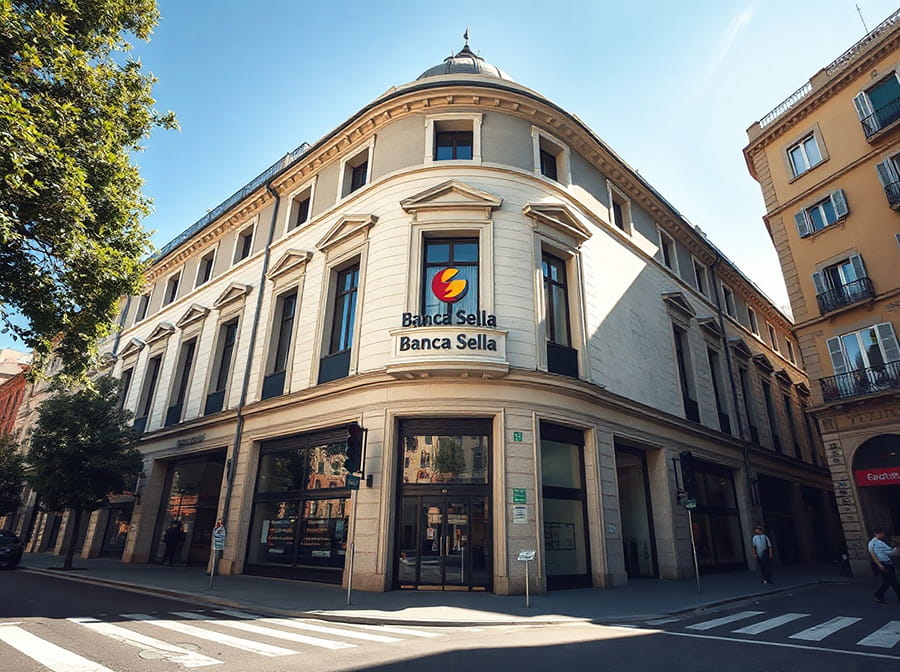
On Thursday 28 May, UniCredit deputy vice chair Elena Carletti warned at the IESE conference in Madrid that the EU has fewer tools to halt a crypto-bank crisis than the US. Italy's Banca Sella becomes Europe's first MiCA-regulated crypto bank. Estonia closes the Zondacrypto 30-day window. The region has 34 days left until the MiCA transitional deadline.
On Thursday, 28 May 2026, the European crypto industry is intensifying its debate about the uneven readiness of the MiCA regime for crisis scenarios. Elena Carletti, UniCredit board member and head of the risk committee, warned at a banking conference at IESE Business School in Madrid that the European Union has fewer tools to prevent systemic shocks linked to crypto firms and banks than US regulators deployed during the 2023 turmoil. Meanwhile, across the Baltics and Nordics, national regulators continue processing CASP applications with only 34 days remaining before the transitional period ends. Lietuvos bankas continues engaging unlicensed operators, Estonia is closing Zondacrypto's 30-day remediation window, and Latvijas Banka maintains its gradual licensing approach.
UniCredit warning - MiCA and the limits of deposit insurance
At the IESE banking conference in Madrid, UniCredit deputy vice chair and risk committee head Elena Carletti publicly questioned whether the EU has the instruments to halt a crisis similar to the one US regulators faced in 2023. At that time, US authorities invoked a systemic risk exception that guaranteed all deposits, including those held by crypto firms, helping to stabilise markets.
Carletti noted that the EU's €100,000 deposit insurance ceiling cannot absorb stress from large stablecoin reserves held as commercial bank deposits. MiCA forces stablecoin issuers to operate within the banking regulatory framework but without extended deposit insurance. This, she argued, is a "double weakness" in the European financial system. As an example, she pointed to Circle's USDC stablecoin issuer having $3.3 billion stuck at Silicon Valley Bank in March 2023 - a precedent the EU has yet to address with a convincing institutional answer.
This warning is significant for the Nordic context, since Scandinavian and Baltic markets host several regulated stablecoin issuers and crypto exchanges that hold client funds in local banks. The application of regional deposit guarantee schemes under MiCA has so far not been raised in broad political discussion, but Carletti's position suggests this topic may become urgent in the coming months.
Banca Sella - first MiCA-regulated crypto bank in Europe
In parallel with UniCredit's warning, on 27 May Italian traditional bank Banca Sella announced that it has become the first MiCA-licensed crypto bank in Europe. This means Banca Sella, within its traditional banking framework, now offers full crypto-asset services including trading, custody and transfer. With this step, Banca Sella becomes a new model for other European traditional banks planning to use the MiCA regime to integrate crypto services on their balance sheets.
This is a symbolically important signal for the Nordic market, where banks such as SEB, Nordea, DNB, Swedbank and Danske Bank have so far taken a notably cautious approach toward direct integration of crypto services. Banca Sella's success may accelerate discussions about how Baltic and Scandinavian universal banks could use the MiCA passport to compete with pure crypto exchanges in the regional market.
Norway - TÝR Markets draws attention, Firi still in application phase
In Norway, TÝR Markets AS, which on 18 May 2026 received the first full CASP authorisation under MiCA Article 63, has attracted heightened media and industry attention this week as a successful example of rapid use of the transitional period. At the same time, Firi - the region's largest crypto exchange with over 400,000 verified users - remains in Finanstilsynet's application review phase. Bare Bitcoin, K33 and NBX are also in the application phase. The Norwegian regulator operates under a statement extending the transition period to 30 June, giving national operators headroom to formally complete CASP authorisation.
The key market question remains whether Firi will obtain full CASP authorisation before 30 June. If not, Firi will need to use the transitional regime until 1 July and afterward either gradually wind down or rely on a Netherlands, Malta or Lithuania passport mechanism to continue serving Norwegian clients.
Estonia - Zondacrypto 30-day window closes
Estonia's Financial Intelligence Unit suspended the operating licence of BB Trade Estonia OÜ - operator of the Zondacrypto exchange - in early May, giving 30 days to remediate all identified violations. The deadline for most violations closes this week, and market participants await the regulator's decision on whether the licence will be reinstated or fully revoked. The violations concern MiCAR non-compliance related to the structuring of transactions offered for the TeamPL token.
If Zondacrypto's licence is revoked, this will be the Estonian regulator's first full enforcement step under the MiCA regime. Estonia has already experienced a substantial contraction of its VASP segment - from the earlier approximately 1,200 registered operators only five remain active, of which only one has received a MiCA CASP authorisation.
Latvia - Latvijas Banka continues gradual licensing
Following the issuance of the fourth CASP licence to Neverless SIA on 25 May, Latvijas Banka continues to process applications gradually and systematically. According to the latest regulator data, there are currently five formally submitted application files and a further 12 in pre-submission consultation. This leaves room for three or four more CASP licences to be issued before the 30 December national transitional period ends - the only 12-month grandfathering period among the Baltic states.
Latvia's approach - careful, consultative and oriented toward medium and smaller operators - continues to provide a stable niche position in the Baltic regional crypto regulatory landscape. Latvijas Banka continues to remind market participants that submitting an application before the transitional period ends is the only safe way to retain grandfathering rights to operate under prior national licensing while the Bank processes the MiCA application.
Lithuania - 217 days to the 31 December deadline
Lietuvos bankas data still shows the largest number of crypto operators among the Baltic states - roughly 800 registered virtual asset service providers. However, MiCA licence applications have been submitted by fewer than 30 operators. The remaining operators either plan to wind down or remain inactive. The largest consolidation wave is therefore expected in the second half of 2026, when the Lithuanian market will likely retain only five to ten fully MiCA-licensed operators.
Currently, three fully licensed CASPs operate in Lithuania - Robinhood Europe, Nuvei Liquidity and Decentralized (the Coingate brand). Further development will be gradual, since the Bank of Lithuania processes applications in three to five months on average. Operators submitting applications after mid-2026 will effectively no longer be able to fit within the grandfathering framework.
Finland - Coinmotion and Northcrypto continue under MiCA
In Finland, Coinmotion and Northcrypto continue operating under previously granted MiCA CASP licences issued by Finanssivalvonta in September and November 2025, respectively. Coinmotion retains its position as the first MiCA-regulated operator in Europe to offer DeFi-based managed yield products. This combination - MiCA regime plus DeFi services - remains unique in the European market and attracts interest from both institutional investors and client-representing advisers.
Northcrypto plans to expand the scope of its MiCA licence to include trading services, with the application already submitted. If approved, Northcrypto will become the second fully licensed Finnish crypto exchange with EEA-wide passport rights.
European Commission MiCA review continues
The European Commission's MiCA regime review consultation, launched on 20 May 2026, remains active until 31 August. UniCredit's and other major European banks' involvement in the consultation in the coming months could turn the political discussion about the interaction of stablecoin issuers and deposit guarantees into one of the industry's main priorities for the second half of 2026.
At the same time, industry participants - including Baltic and Nordic CASPs - are evaluating whether to participate in the consultation with formal submissions. Of particular importance to regional operators is the consultation section addressing MiCA passporting operations, reserve scope questions and the cooperation mechanisms between competent authorities.
Market context and summary
In Thursday's trading session, Bitcoin opened in the $76,500-$78,000 range, with Ethereum near the $2,050 mark. The market reaction to UniCredit's warning remains moderate - investors have long been aware of the structural differences between EU and US banking regulatory regimes. However, Carletti's comments have drawn additional attention to Banca Sella's success story and the accelerating entry of traditional banks into the MiCA regime.
The regional picture on Thursday: Norway has issued one full CASP licence (TÝR Markets), and several large national players including Firi remain in the application review phase. Sweden continues to deal with the aftermath of Safello's application and is starting to process other national applications. Finland maintains a stable Coinmotion and Northcrypto position. Latvia - four CASP licences and 12 applications in consultation. Lithuania approaches the 31 December deadline with the largest number of inactive operators. Estonia awaits the regulator's decision on the future of Zondacrypto's licence.
Investors using Baltic or Nordic exchanges are still advised, before 1 July, to verify the operator's MiCA licence status in the relevant national regulator's register or in the ESMA interim MiCA register, which on 22 May 2026 listed 204 authorised CASPs, of which 51 received their licence already in 2026. This is the only safe guarantee that the service provider will be able to continue operating after the end of the transitional period and that client funds will be protected under the single EU regime.
Sources
- UniCredit warns Europe may struggle to contain crypto-bank crisis under MiCA rules (CoinDesk, 28.05.2026)
- Italy's Banca Sella Becomes First MiCA Regulated Crypto Bank (CryptoTimes, 27.05.2026)
- Finanstilsynet - Týr Markets AS får tillatelse som CASP-foretak (18.05.2026)
- Finanssivalvonta - The European regulatory framework on crypto-asset service providers is complete (May 2026)
- Estonia has suspended the license of the scandal-hit exchange Zondacrypto (Incrypted)