News
Boerse Stuttgart Digital - first EU MiCA CASP
Boerse Stuttgart Digital is the first EU MiCA CASP licensee - granted by BaFin on 17 January 2025. In-depth review of the structure, DZ Bank partnership with 737 German cooperative banks, BSDEX retail exchange, and suitability for Baltic/Nordic users.
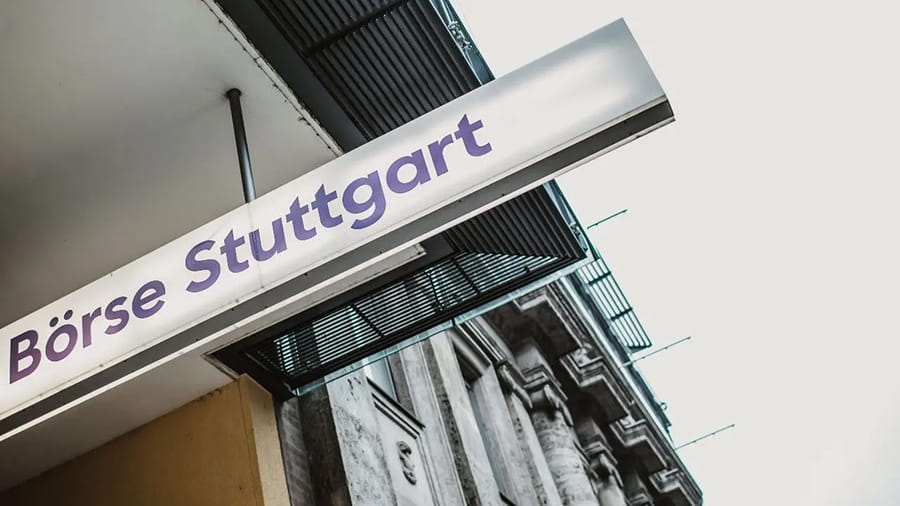
On 17 January 2025 BaFin granted the first EU MiCA CASP licence to Boerse Stuttgart Digital Custody GmbH - a historic event for EU regulatory landscape. This is the digital arm of Germany second-largest stock exchange Boerse Stuttgart Group, operating two brands: bsdigital.com (institutional B2B custody/OTC/MTF) and bsdex.de (retail exchange, launched 2019). The 2024 DZ Bank partnership provides crypto services to 737 German community and cooperative banks. Custody is NOT lent to third parties - bank-grade security standard. In this in-depth review we analyse BSD structure, fees, security, and suitability for Baltic and Nordic users in 2026.
Boerse Stuttgart Digital - first EU MiCA CASP
17 January 2025 is a historic date in the European crypto regulation history. On that day, Germany's Federal Financial Supervisory Authority (BaFin) issued the first European Union MiCA Crypto-Asset Service Provider (CASP) licence - and the recipient was Boerse Stuttgart Digital Custody GmbH, the digital arm of the Stuttgart Stock Exchange (Boerse Stuttgart Group). In this in-depth review we explain the BSD structure, why it is significant for the restructuring of the European financial landscape, and whether it is suitable for Baltic and Nordic users in mid-2026.
Key facts at a glance
- Legal entity: Boerse Stuttgart Digital Custody GmbH
- Parent company: Boerse Stuttgart Group (Germany's 2nd largest stock exchange)
- MiCA CASP licence: 17 January 2025 (first in the EU)
- Regulator: BaFin (Germany)
- Two brands: bsdigital.com (institutional), bsdex.de (retail)
- BSDEX founded: 2019
- DZ Bank partner: 737 German community/cooperative banks
- Supported fiat: EUR (SEPA)
- Supported countries: 13 (potentially all 27 EU via passporting)
- Coin selection: ~40 (BTC, ETH, LTC, XRP, BCH, LINK, DOT, SOL, ADA and others)
- BSDEX fees: from 0.20% per trade (maker/taker)
- Custody: bank-grade, NOT lent to third parties
- NorriWire rating: 4.0 / 5
History: from Boerse Stuttgart to the digital arm
Boerse Stuttgart itself is a heritage-rich institution - founded in 1861, it is Germany's second-largest stock exchange (after Deutsche Boerse in Frankfurt). It specialises in retail investment products - approximately 70% of all retail structured product trades in Germany are executed via Stuttgart. This gives it unique retail customer competence, differing from Frankfurt's institutional focus.
In 2019 Boerse Stuttgart launched BSDEX (Boerse Stuttgart Digital Exchange) - a retail crypto exchange for German users. This was the first official stock exchange attempt to build a crypto trading platform in Europe. The initial offering was limited (BTC only), but it expanded over the years to ~40 coins and added a mobile app, SEPA deposits and withdrawals, and a transparent maker-taker fee structure.
In 2022-2024 the Stuttgart group restructured its digital activity - a separate legal entity Boerse Stuttgart Digital Custody GmbH was created to manage all crypto operations, and Boerse Stuttgart Digital Exchange GmbH was set up to operate the BSDEX retail platform. This dual structure allowed the group to develop the institutional (B2B) and retail directions in parallel.
17 January 2025: the first MiCA CASP licence
The full MiCA (Markets in Crypto-Assets Regulation) regime entered into force on 30 December 2024, and member states had transition periods to process licence applications. Germany's situation was complicated - the coalition collapse at end of 2024 delayed the Bundestag vote to designate BaFin as the local MiCA regulator. The vote took place only a few days before Christmas.
BaFin then processed BSD's application at speed - and on 17 January 2025 announced the licence issuance. This was not only the first German CASP, but the first in the entire European Union. Although other jurisdictions (Malta, Estonia, the Netherlands) quickly followed with their own CASPs, BSD remains the historic EU-first.
The practical significance of this event is threefold:
- EU passporting rights: BSD can freely offer crypto services in all 27 EU/EEA countries without additional local licensing
- Institutional trust: Banks, brokers and asset managers across Europe can now partner with BSD with full regulatory clarity
- Competitive advantage: BSD secured a competitive edge over other exchanges still working on their MiCA licences
Two brands: bsdigital.com vs bsdex.de
Unlike other exchanges that operate one brand for all segments, Boerse Stuttgart Digital has set up a strategic dual-brand model:
bsdigital.com (institutional B2B)
bsdigital.com is BSD's institutional platform serving banks, brokers, asset managers and other professional clients. Main services:
- Custody: Asset storage with bank-grade security standards
- OTC trading: Large-volume transactions directly with institutional counterparties
- MTF (Multilateral Trading Facility): Regulated trading venue for institutional participants
- Liquidity services: Market making and liquidity provision to other exchanges
- API integration: White-label bank integrations for crypto services
bsdex.de (retail)
bsdex.de is BSD's retail exchange serving individual customers, primarily in the German market. Main features:
- Simple UX: Optimised for German audiences with a full interface in German and English
- Coin selection: ~40 largest cryptocurrencies, including BTC, ETH, LTC, XRP, BCH, LINK, DOT, SOL, ADA
- Fees: from 0.20% maker/taker
- EUR SEPA: Free deposits and withdrawals
- Mobile app: iOS and Android with full functionality
- Transparent pricing: No hidden fees or spreads
The dual-brand model allows BSD to serve both segments with appropriate UX and risk management - institutional clients do not want the simplified retail UI, but retail customers are confused by the professional orderbook and OTC functionality.
DZ Bank partnership: 737 German community banks
One of BSD's most significant deals is the 2024 partnership with DZ Bank - Germany's second-largest banking group and the central institution for the cooperative banking sector. DZ Bank serves approximately 737 community and cooperative banks across Germany (the Volksbanken Raiffeisenbanken system).
What exactly is happening
Through BSD's institutional infrastructure, DZ Bank provides crypto services to its 737 client banks - which in turn can offer them to their retail base. This means millions of German retail customers will be able to buy crypto for the first time directly through their local bank with full MiCA regulatory protection.
The technical and operational setup began at end of 2024, with phased rollout stages in 2025:
- End of 2024: Technical integration between DZ Bank and BSD
- Early 2025: First banks are connected and testing phase begins with selected retail customers
- 2025-2026: Phased rollout to all 737 banks
- 2026+: Full service availability to retail customers via their local cooperative banks
Why this is so significant
The DZ Bank partnership is the largest unprecedented (until 2024) experiment in European bank-crypto integration. Other banks in Europe (BBVA, ING, SEB) have offered crypto, but not at this scale. The 737-bank network means millions of new MiCA-regulated retail crypto accounts, and BSD is the central infrastructure provider.
By comparison, LHV Pank via BitGo/Bitstamp partnership serves the Estonian and UK markets, but DZ Bank-BSD combines Germany's second-largest banking group with the first EU MiCA CASP.
Security standards: bank-grade and not lent out
One of BSD's biggest differentiating elements is its security approach. Unlike many other exchanges, BSD does NOT lend client crypto assets to third parties - meaning BSD does not participate in DeFi farming, yield programs, or other activities where client crypto would be used in external protocols.
This is a bank-grade security standard reflecting Boerse Stuttgart's traditional stock-exchange operations philosophy: the client's assets remain the client's property and are stored in secure cold storage repositories. Most institutional clients (banks, asset managers, brokers) demand this approach as a minimum standard, and BSD provides it at retail level too.
Security features summary:
- Cold storage: Majority of client crypto holdings offline
- Bank-grade custody: Client assets not lent out or used in farming
- Two-factor authentication (2FA): Mandatory for all active accounts
- BaFin supervision: Regular reporting to Germany's financial regulator
- AML/KYC: Mandatory identity verification for all customers
- MiCA regulated framework: Full EU regulatory protection
The only security "gap" noted in the NorriWire profile is that BSD does not publish Proof of Reserves - cryptographically verifiable evidence of asset coverage. This is not unusual for a regulated institution - most European traditional financial institutions do not publish PoR because their security model is based on regulator audits rather than cryptographic transparency. But compared to Kraken or Bitvavo (which publish PoR), it is a minor minus.
Fees and pricing structure
The BSDEX retail fee structure is transparent and competitive, although not the cheapest in the market:
| Fee | BSDEX | For comparison: Bitvavo | Kvarn X |
|---|---|---|---|
| Spot maker | 0.20% | 0.04-0.25% | 0.10% |
| Spot taker | 0.20% | 0.04-0.25% | 0.10% |
| SEPA deposit | Free | Free | Free |
| SEPA withdrawal | Free | Free | Free |
| Card deposit | Not offered | 1.5% | Free |
A 0.20% fee is definitely higher than Bitvavo (0.04%-0.25% depending on volume) or Kvarn X (0.10%). However, this fee is transparent, fixed and has no additional spread - which cannot be said of instant-buy platforms (like Bittiraha with ~2% spread) or some banks offering crypto with 1-3% spreads.
The institutional pricing on the bsdigital.com side is individual and typically based on trading volume and OTC deals - this information is not public and is negotiated individually with each institutional client.
Offering overview: what BSD provides in 2026
Supported cryptocurrencies (BSDEX, ~40)
Core Layer 1: BTC, ETH, LTC, BCH Smart contract platforms: SOL, ADA, DOT, AVAX, MATIC DeFi: LINK, UNI, AAVE Others: XRP, XLM, ATOM, NEAR, TRX, and more
Supported countries (13 officially available)
- Germany: Full BSDEX and DZ Bank channels
- Other EU/EEA countries: Available via passporting; specific marketing campaigns not in every market
- Scandinavia: Available via passporting but without local languages
- Baltics: Available via passporting but without LV/LT/EE interface
Features
- SEPA transfers
- Mobile app (iOS + Android)
- Two-factor authentication
- Cold storage
- 40+ crypto trading pairs
- EUR fiat support
- Professional orderbook (BSDEX)
- OTC and MTF (bsdigital.com)
Limitations
- No derivatives (futures, perpetuals)
- No margin trading
- No Bank ID support
- No LV/LT/EE/Scandinavian languages
- Higher fee level than Bitvavo or Kvarn X
- Limited coin selection on retail side (~40)
- No published Proof of Reserves
Suitability for Baltic and Nordic users
BSD is historically important as the first EU MiCA CASP, but practically it is not the optimal choice for Baltic and Nordic retail users for three reasons.
1. Language barrier
The BSDEX interface and support are only available in German and English. This means:
- For Latvian, Lithuanian, Estonian users: Must communicate with support in English, which can pose challenges for beginners
- For Finns: Local exchanges (Coinmotion, Northcrypto, Kvarn X) offer Finnish language and better local support
- For Swedes, Danes, Norwegians: Safello (Sweden) and other local platforms provide better local support
2. Fee level
The 0.20% maker/taker fee is higher than competing European platforms:
- Bitvavo: 0.04-0.25% (volume-based)
- Kvarn X: 0.10%
- Coinmotion: 0.4-1.0% (historically higher but decreasing)
- Northcrypto: 0.6-1.0%
For active traders with high trading volume, this difference can mean hundreds of euros per year.
3. Limited coin selection on the retail side
~40 coins is a respectable offering for a beginner, but for an investor wanting to diversify their portfolio with smaller altcoins or new DeFi tokens, Bitvavo (220+ coins) or Kraken EU (300+ coins) offer significantly broader choice.
Where BSD is a good choice for the Baltics/Nordics
Although not ideal as a retail platform, BSD offers valuable options in the following situations:
- Institutional clients: For a Baltic fintech, bank or asset manager, the quality of BSD's institutional offering and MiCA-first security standard are significant
- Corporate treasury: For companies wanting to hold BTC or other crypto as balance sheet assets, BSD's bank-grade custody is optimal
- German-speaking customers: Baltic or Nordic residents with German background or people doing business in the German market can find BSD attractive
- MiCA brand value: For users who want to use the first EU MiCA CASP for symbolic reasons
Comparison with competing MiCA-licensed platforms
Many other platforms received MiCA CASP licences after BSD. Overview of main alternatives in mid-2026:
| Platform | MiCA licence | Regulator | Target audience | Fees |
|---|---|---|---|---|
| Boerse Stuttgart Digital | 2025-01-17 (first) | BaFin (DE) | Institutional + retail | 0.20% |
| Bitvavo | early 2025 | DNB (NL) | Retail + crypto-native | 0.04-0.25% |
| Coinmotion / Bittiraha | 2025-06 (first FI) | FIN-FSA (FI) | Finnish retail + institutional | 0.4-1.0% |
| Kraken EU | 2025 | CySEC (CY) | Retail + pro traders | 0.10-0.40% |
| Banca Sella Crypto | 2025-02 (first IT) | Banca d'Italia (IT) | Italian bank clients | Unknown |
| LHV Pank | 2025 | EE Finantsinspektsioon | Estonian/UK bank clients | Higher |
| Safello | 2025 | Finansinspektionen (SE) | Swedish retail | 1-2% |
| Backpack EU | 2025 (LT) | Bank of Lithuania | Retail + pro traders | 0.10% |
In this context, BSD positions itself as historically the first EU MiCA CASP, with a focus on institutional segment and strategic DZ Bank partnership, rather than the cheapest or most accessible retail exchange.
BSD's future: where the group is heading
Looking at what will happen with BSD in 2026-2027:
1. Full implementation of DZ Bank rollout
The biggest increase in BSD revenue will come from the gradual integration of DZ Bank's 737-bank network. After its full implementation (expected H2 2026), BSD will become the largest institutional crypto infrastructure in Europe by number of served banks.
2. Stablecoins and MiCA 2
The upcoming MiCA 2 (full stablecoin and DeFi regime in 2026-2027) will allow BSD to expand its offering with euro stablecoin services. The recent Qivalis consortium announcement shows how European banks are planning a coordinated approach to the euro stablecoin market - BSD could serve as an infrastructure provider for Qivalis or other bank initiatives.
3. Tokenisation
Boerse Stuttgart Group's broader strategic direction includes tokenised traditional assets (equities, bonds, funds) via regulated blockchain infrastructure. BSD as the group's digital arm will serve as the main technical platform for this direction.
4. More EU-EEA countries
Currently BSD officially serves 13 countries, although via passporting it is available in all 27 EU/EEA countries. It is expected that in 2026-2027 BSD will add local languages and marketing activities in several major EU markets (France, Italy, Spain, the Netherlands).
Our verdict: 4.0 / 5
Boerse Stuttgart Digital is a strong MiCA platform of historic significance and the backing of a traditional financial institution. The fact that BSD was the first EU MiCA CASP, combined with Boerse Stuttgart Group's reputation, the DZ Bank partnership and the bank-grade custody standard, makes it one of the most trusted crypto exchanges in 2026.
For Baltic and Nordic retail users we recommend other platforms (Bitvavo, Kraken EU, Kvarn X) with lower fees, broader coin selection and better local support. But for institutional clients, fintech teams, corporate treasury and people doing business in the German or Austrian market, BSD is an absolute first-class choice.
The NorriWire rating for BSD is 4.0/5 stars - higher than most European exchanges, reflecting regulatory leadership, traditional financial institution backing and bank-grade security standards.
Related articles
- Bittiraha / Coinmotion deep dive - analysis of Finland's first MiCA CASP exchange
- LHV Pank MiCA crypto review - Estonian bank with BitGo/Bitstamp crypto services
- Safello deep dive - analysis of Sweden's historical BTC broker
- Qivalis euro stablecoin consortium - 37 European banks' stablecoin initiative
- Crypto security incidents H1 2026 - in-depth review of Zcash, Humanity, AudiA6
Sources
- CoinDesk: Boerse Stuttgart Digital Lands MiCA License From Germany
- Ledger Insights: Boerse Stuttgart Digital is first to land EU-wide MiCAR crypto license
- CryptoNews: MiCA - Boerse Stuttgart Digital Gets EU-Wide Crypto License
- Cointelegraph: DZ Bank partners with Boerse Stuttgart for crypto trading
- Ledger Insights: DZ Bank partners Boerse Stuttgart for crypto for German cooperative banks
- BSDigital.com: Boerse Stuttgart Digital Exchange MTF
AI disclosure: An AI assistant was used in preparing this article. The facts and market data were verified by a NorriWire editor before publication.
This is not financial advice. Cryptocurrency values can fluctuate significantly. Familiarise yourself with the risks before investing.