News
Crypto exchanges in the Baltics and Nordics - 04.06.2026
On Thursday the HIPTHER conference concludes in Tallinn - the industry outlook after 1 July and public-private sector cooperation. 26 days remain before the end of the MiCA transition period, and the market awaits the Finanstilsynet decision on Firi.
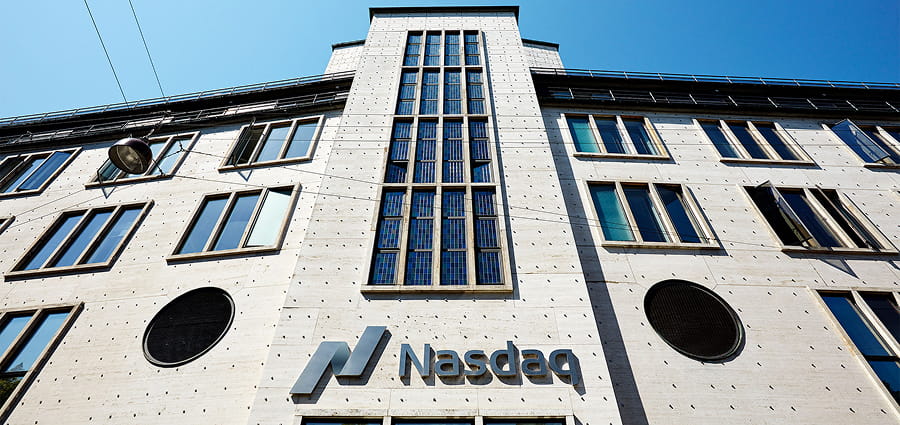
On Thursday 4 June the HIPTHER Baltics and Nordics conference concludes in Tallinn, focusing on industry development after 1 July. The market awaits a Norwegian Finanstilsynet decision on the Firi application, Latvijas Banka's fifth CASP licence and the Zondacrypto remediation progress.
On Thursday, 4 June 2026, the attention of the Baltic and Nordic crypto market was focused on Tallinn, where the third and final day of the HIPTHER Baltics and Nordics conference concluded at the Hilton Tallinn Park hotel. The closing day's agenda centred on the industry's outlook after the 1 July deadline and on public and private sector cooperation formats for future fintech growth. Exactly 26 days remain before the end of the MiCA transition period on 1 July. Market participants continue to await several regulatory decisions - the Norwegian Finanstilsynet assessment of the Firi application, which could be announced as early as Friday, Latvijas Banka's fifth CASP licence, and the Estonian Financial Intelligence Unit's final decision on the future status of Zondacrypto's operating licence. Market context: Bitcoin traded close to 74,500 US dollars in Thursday's session, and the overall crypto market remains in a moderate spring consolidation mode ahead of the US Federal Reserve's June meeting.
HIPTHER conference closing day - industry outlook after 1 July
The third day of the HIPTHER Baltics and Nordics conference at the Hilton Tallinn Park hotel was marked on Thursday by a strategic look into the future. The closing plenary was devoted to the question of how the regional crypto industry will develop after the MiCA transition period ends on 1 July and only fully licensed operators remain in the market. Conference participants agreed that the main trend will be consolidation - smaller operators will either merge with larger players or choose a market exit, while licensed operators will be able to use the passporting mechanism to expand throughout the European Economic Area.
The central panel discussion of the closing day addressed public and private sector cooperation. Representatives of Baltic and Nordic regulators confirmed that after 1 July the supervisory approach will become more proportionate - the regulator will concentrate resources on the largest and most systemically important operators while maintaining dialogue with smaller market participants. Several industry representatives stressed the need for clearer guidance on the regulation of stablecoins and tokenised assets, as this is an area where the MiCA regime is still maturing in practice.
On Thursday afternoon the conference presented data on employment and investment in the regional crypto sector. According to a compilation by the Nordic Fintech Association, around 11,500 people work in the Baltic and Nordic crypto and blockchain sector at the start of 2026, and the industry has grown by an average of 14 percent per year over the past two years despite market volatility. The conference organisers announced that the next HIPTHER regional conference will take place in Vilnius in November 2026, reflecting Lithuania's growing role in the region's fintech landscape.
Norway - awaiting the Firi decision and Bare Bitcoin integration
In Norway, Thursday passed in anticipation of the Finanstilsynet decision on Firi's MiCA CASP application. According to Firi's earlier statements, the application is in the final documentary review phase, and a decision is expected within the first ten days of June. Market participants increasingly discuss the scenario that the licence could be granted as early as Friday, 5 June. If so, Firi's expansion into Sweden via the passporting mechanism will begin within a week. Firi currently serves about 400,000 verified customers in Norway and has technically already prepared for the rollout of a multilingual Swedish-language interface.
Bare Bitcoin continued on Thursday to communicate about its strategic partnership with the Sparebank 1 group. The company's management confirmed that technical preparation of the integration has already begun and that the first phase, with bitcoin buying and selling functions, will be activated immediately after Bare Bitcoin receives its MiCA CASP licence, which is expected in the first week of July. The Sparebank 1 group serves around 690,000 private customers in Norway, which would potentially significantly expand Bare Bitcoin's reach in the retail customer segment.
TÝR Markets AS, which received Norway's first MiCA CASP licence on 18 May, published updated data on Thursday about its expansion into Sweden and Denmark. In the first three weeks after launching operations in the region, the company has attracted more than 24,000 new customer registrations. NBX, which maintains a listing on the Oslo exchange, continued on Thursday to prepare for its 12 June shareholders' meeting and published an additional explanation of its planned 180 million Norwegian kroner capital issuance, intended to fund business expansion and cover MiCA compliance costs.
Estonia - Zondacrypto remediation progress and Finantsinspektsioon supervision
In Estonia, the assessment of the compliance remediation situation of Zondacrypto operator BB Trade Estonia OÜ continued on Thursday. Thursday is day 17 of the 30-day deadline that ends on 17 June. Finantsinspektsioon previously confirmed that the regulator has received the operator's first formal interim report on the implementation of the remediation plan, and a thorough review of this material continued on Thursday. According to the regulator's statement, the final decision on the future status of BB Trade Estonia's operating licence will be announced within a week after the 17 June deadline ends.
Among regional customers, the Zondacrypto situation continues to affect market perception. A moderate increase in fund transfers to fully MiCA-licensed alternative operators has been recorded in the first week of June, although the platform continues normal operations in those service categories not covered by the partial suspension. The Zondacrypto platform still has around 1.3 million users across Europe, of whom about 380,000 are in the Baltic region.
In the broader Estonian context, Finantsinspektsioon representatives reiterated on Thursday, on the sidelines of the Tallinn conference, that after 1 July only operators with a full MiCA CASP licence or a passporting notification from another European Economic Area member state will be allowed to operate in the Estonian market. VASP operators that have not received a licence will have their previous authorisations revoked, and a customer fund return procedure will be established. Estonia has currently issued only one full MiCA CASP licence, reflecting the broader market consolidation dynamic of 2023-2025.
Latvia - awaiting the fifth CASP licence
In Latvia, preparations continued on Thursday for the announcement of the fifth CASP licence. Latvijas Banka is currently processing five active formal applications and several pre-submission consultation cases. Latvijas Banka representatives noted in the closing-day working group on cross-border supervision at the Tallinn conference that each application is assessed with particular attention to technological security and client fund segregation mechanisms, and that the fifth licence could be announced in the first or second week of June.
Latvia's experience with a 12-month national transition period until 30 December was again highlighted at the conference session as the region's best-practice example. This approach has provided the regulator with sufficient capacity for a thorough assessment of each application while not creating market turbulence for customers. Latvijas Banka has indicated that around 60 percent of applications require additional documentary clarifications in the technological security section, and in May it published an updated version of the pre-submission consultation guidelines, which is publicly available in Latvian and English.
On Thursday, Latvijas Banka also confirmed the schedule for June's public hearings on the technical aspects of MiCA application. The hearings will cover the regulation of relationships between stablecoin issuers and operators, client fund segregation mechanisms, and cross-border service notification procedures. The hearing format will be hybrid - in-person attendance in Riga and remote participation from any European Economic Area member state.
Lithuania - technical blocking mechanism preparation and the Vilnius conference
In Lithuania, Lietuvos bankas continued on Thursday to prepare for the activation of the technical blocking mechanism after 1 July. The mechanism is coordinated with internet service providers and financial payment system operators and will ensure that unlicensed crypto operators can no longer serve Lithuanian customers. The mechanism will initially cover around 280 operator websites which, according to a Lietuvos bankas check, have not currently submitted MiCA applications and continue to actively advertise their services to Lithuanian consumers.
Lithuania's approach remains markedly strict - the regulator has publicly warned that after 1 July unlicensed operators face financial sanctions, website blocking and, in some cases, criminal liability for company managers. Of around 32 submitted MiCA CASP applications, three have received a full licence - Robinhood Europe, Nuvei Liquidity and Decentralized (the Coingate brand) - and two additional applications are in the final review phase. On Thursday, Lithuanian representatives announced at the conference's closing session that the next HIPTHER regional conference in November 2026 will take place in Vilnius, which the industry perceived as confirmation of Lithuania's growing role in the region's fintech sector.
Finland and Sweden - Coinmotion, Northcrypto and Bitwise products
In Finland, Coinmotion and Northcrypto continue to operate on previously granted MiCA CASP licences. On Thursday, Coinmotion's management confirmed that by the end of July a second regional office will open in Stockholm with a five-person team to support expansion into the Swedish market. This is a significant expansion of operational capacity and indicates Coinmotion's strategic priority in the Swedish retail customer segment. Finanssivalvonta confirmed again on Thursday that the transition period in Finland ends on 30 June and that all unlicensed operators will face an operations suspension procedure after that date.
Northcrypto offers more than 260 crypto assets in a MiCA-licensed environment and confirmed on Thursday that six additional assets, previously removed during the transition period, will be added in July. In Sweden, Safello continued preparing its expansion plan into the Norwegian market via the MiCA passporting mechanism, with an operational launch planned for the first week of July. Safello's active user base grew by eight percent in May compared to April, although the net turnover level reflects the broader crypto market consolidation of early 2026.
Bitwise presented detailed plans on Thursday at the Tallinn conference's closing session for two additional exchange-traded products to be listed on Nasdaq Stockholm in July - one offering exposure to Ethereum, the other to Solana with a physical custody structure. These products would complement Bitwise's existing range of seven crypto ETPs on Nasdaq Stockholm and reflect the growing institutional demand for regulated crypto investment instruments in the Nordic market.
Denmark and the European context - passporting and the MiCA review
In Denmark, Finanstilsynet continues to use the full 18-month grandfathering period, and on Thursday there was still no nationally issued MiCA CASP licence in Denmark. The Danish market essentially relies on operators passported from Norway and Finland, and Firi is expected to join this list after the Finanstilsynet (NO) decision. Denmark's Nasdaq Copenhagen exchange advisory working group on the listing of crypto ETP products, whose first meeting is scheduled for July, continues its work and includes representatives from Bitwise, 21Shares and Nordea.
In the broader European context, the European Commission's MiCA regime review consultation continued on Thursday and will remain active until 31 August. The Baltic Banking Association and the Nordic Fintech Association are preparing a joint submission that will focus on three directions - harmonisation of stablecoin issuer guarantees, acceleration of the public register of passporting notifications, and capacity support mechanisms for small national regulators in cross-border crisis situations. The final version of the submission will be published in the last week of June. At ESMA level, preparation also continues for the final MiCA guidelines, which will enter into force on 28 July.
Market context and the agenda for the coming days
In Thursday's trading data, Bitcoin traded close to 74,500 US dollars, maintaining a stable zone after the correction earlier in the week. Ethereum traded close to 2,030 US dollars, and the overall crypto market volume remains moderately stable. The regional crypto sector's market reaction remains moderate - investors continue to focus on global macroeconomic factors and the US Federal Reserve's June meeting base rate policy. The US Federal Reserve's FOMC meeting will take place on 17-18 June, and the market essentially expects an unchanged base rate policy.
On Friday, 5 June, market attention will be focused on the possible Norwegian Finanstilsynet announcement of the result of the Firi application assessment. Latvijas Banka's fifth CASP licence decision is also expected in the coming days. On 12 June, Norway's NBX shareholders' meeting will take place, and on 17 June the Estonian Financial Intelligence Unit must make its final decision on the future status of Zondacrypto's operating licence. Throughout June, regional regulators will continue customer information campaigns about checking MiCA status.
Investors using Baltic or Nordic crypto exchanges are still advised, before 1 July, to check the operator's MiCA licence status in the ESMA interim CASP register or the relevant national regulator's register. This is the only sure guarantee that the service provider will be able to continue operating after the end of the transition period and that customer funds will be protected under the unified European Union regime. If an operator has not published a clear statement about its MiCA application status or transition plans, this is a justified warning sign for a cautious customer approach.
Sources
- ESMA - Markets in Crypto-Assets Regulation (MiCA) overview
- European Commission - Targeted consultation on the review of MiCA Regulation
- European Commission - Crypto-assets overview
- HIPTHER Baltics & Nordics: Tallinn 2026 Agenda
- Finanstilsynet - Firi AS får tillatelse som CASP-foretak
- Finanstilsynet - TÝR Markets AS får tillatelse som CASP-foretak